From quantum threat to enterprise readiness
Enterprise PQC Readiness
Post-quantum readiness is an organization-wide journey. These slides explain the quantum context, the cryptographic landscape, and the coordinated work involved in preparing for migration.
A slide-by-slide guide for leaders and teams building a practical, coordinated PQC readiness program.
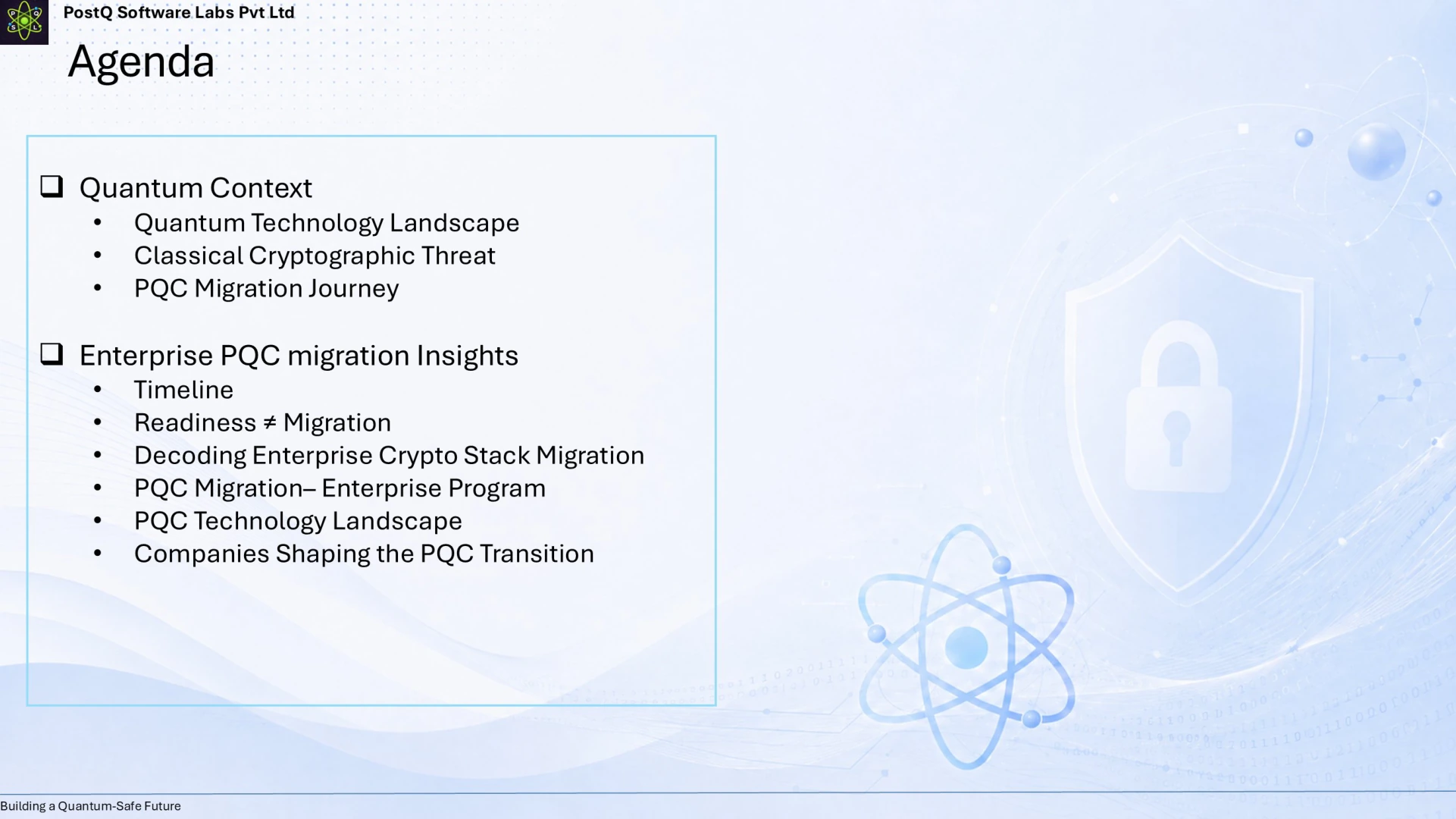
This opening frames PQC as both a technology shift and an organizational migration. The presentation connects an understanding of quantum-related cryptographic risk with the work of assessing systems and planning an enterprise response.
The roadmap moves from quantum context and the classical cryptographic threat into the migration journey, readiness, enterprise crypto-stack complexity, program planning, the technology landscape, and the organizations active in the transition.
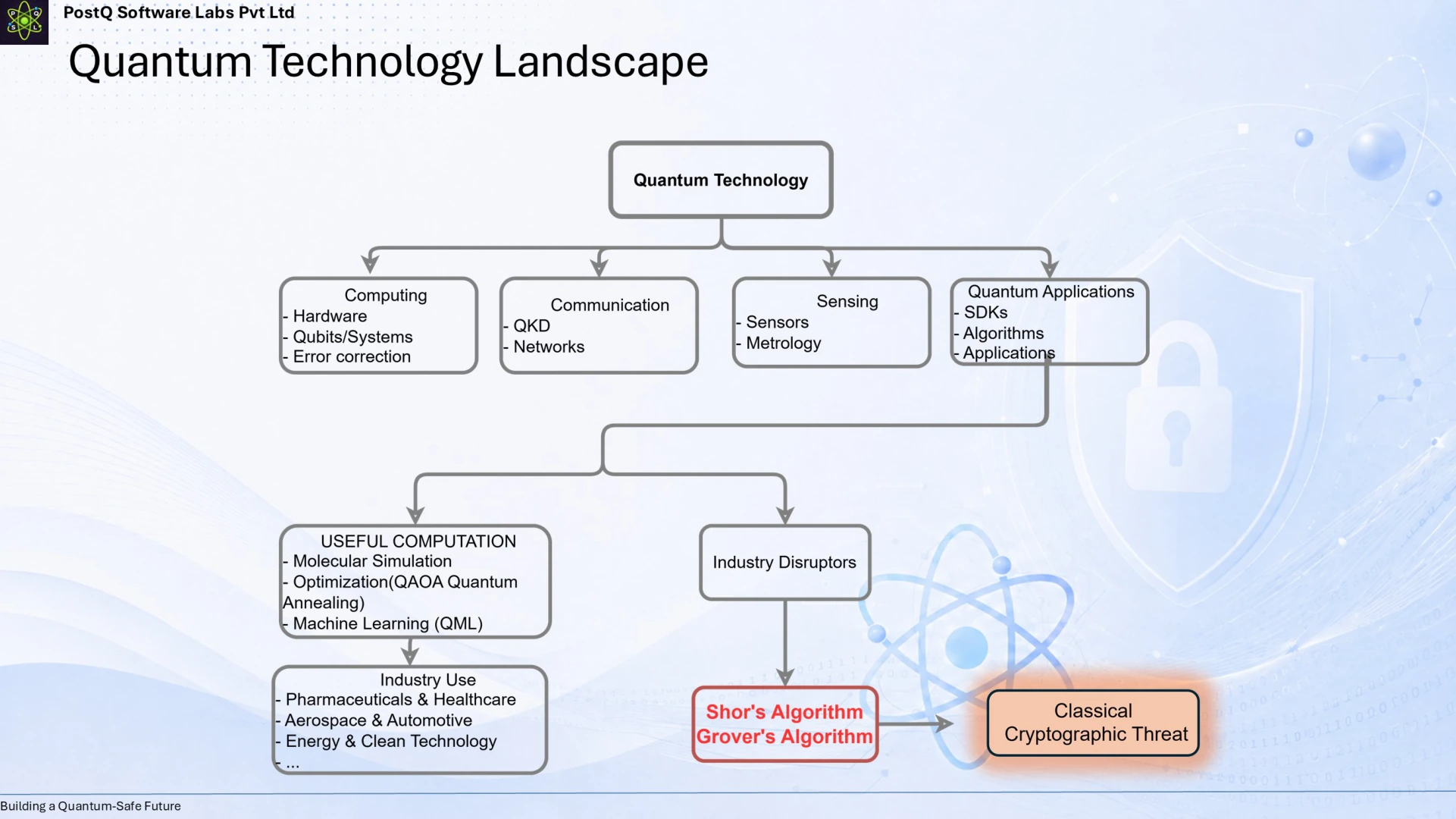
Quantum technology spans more than computing: the diagram also places communication, sensing, and quantum applications in the landscape. The distinction matters because the cryptographic migration concern in this deck is tied to particular algorithmic capabilities, not every development in quantum technology.
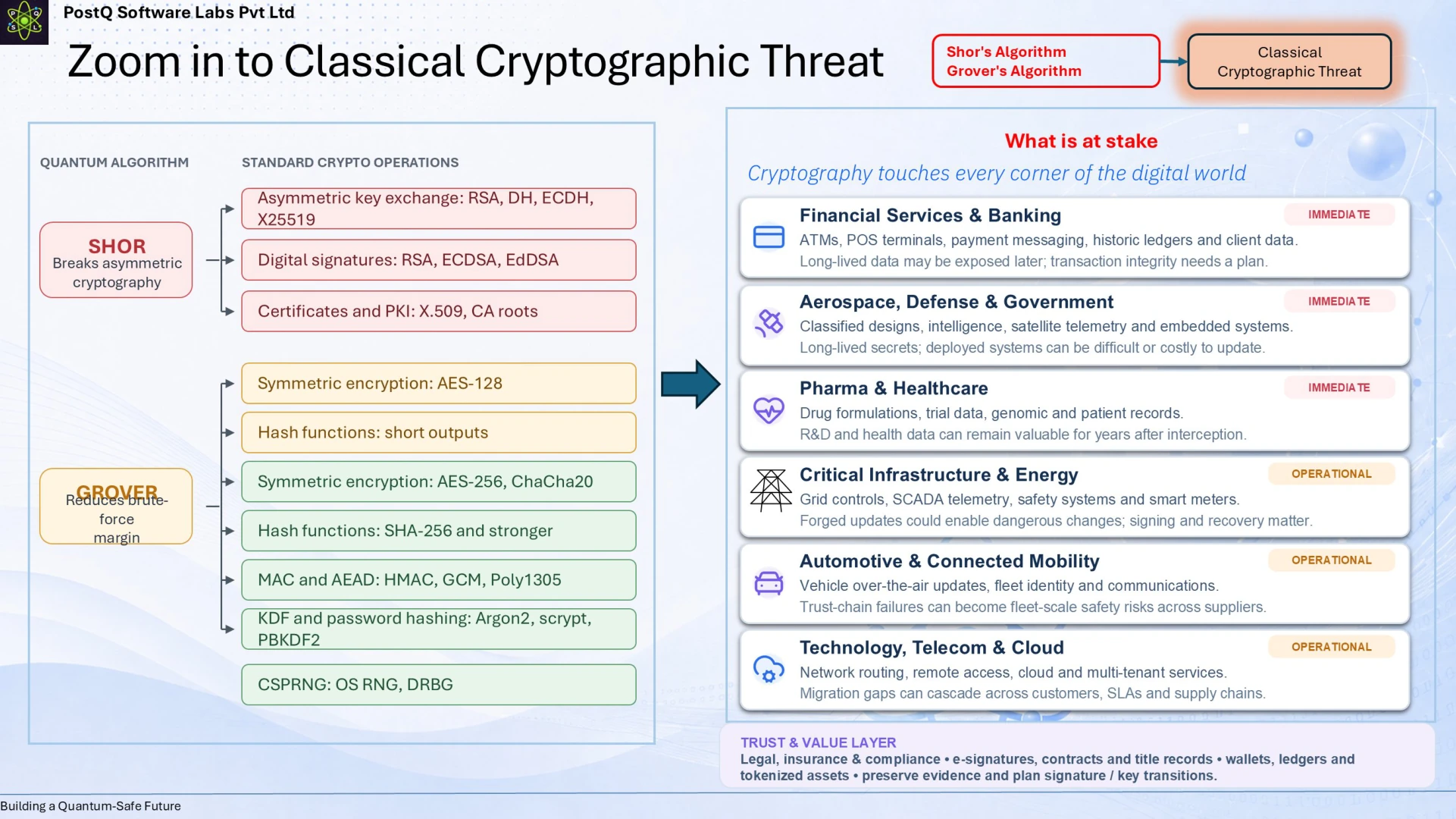
The slide contrasts Shor's algorithm, which threatens widely used public-key operations such as key exchange and digital signatures, with Grover's algorithm, which reduces the brute-force margin for symmetric cryptography. It then maps those concerns to long-lived data, trust chains, connected infrastructure, and sector-specific systems.
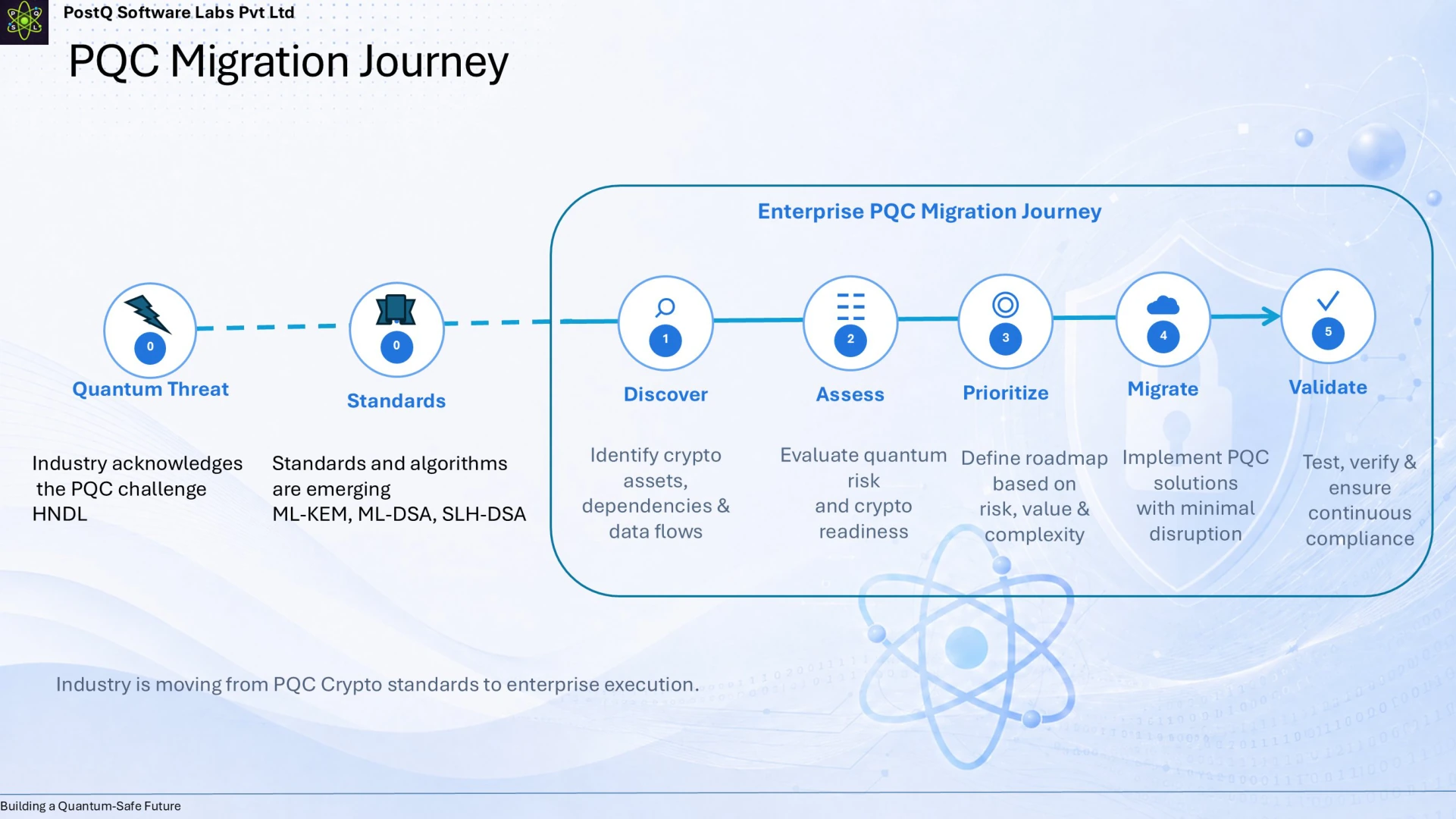
The journey connects standards and quantum-threat awareness to discovery, assessment, prioritization, migration, and validation. An enterprise needs an inventory and evidence before it can rank risk, choose migration waves, implement changes, and verify the result.
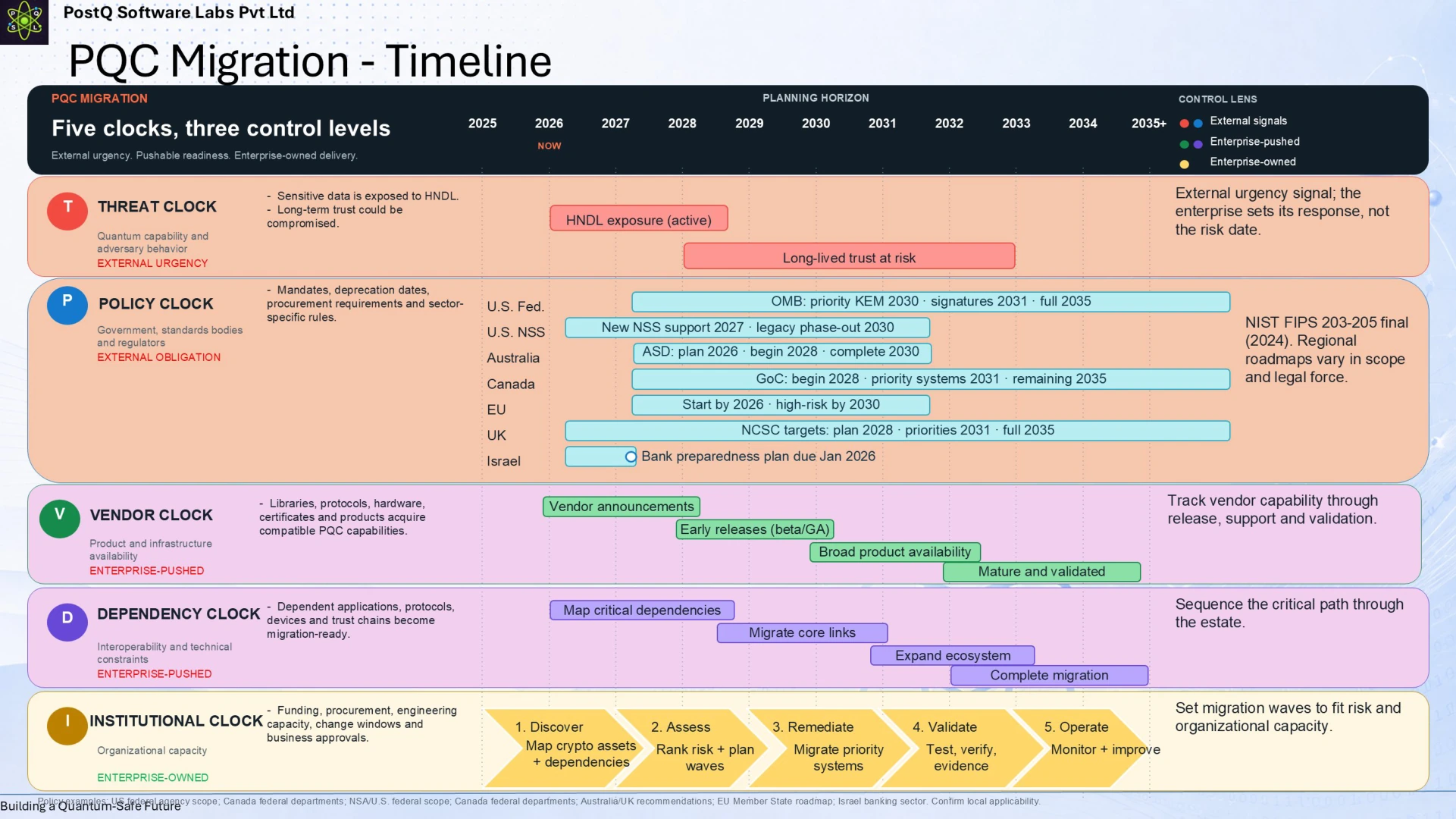
Five clocks separate different drivers of migration: threat, policy, vendor readiness, dependency readiness, and institutional delivery. External signals create urgency or obligations; organizations can influence supplier and dependency readiness, while they own their capacity, sequencing, and execution. Policy dates shown are examples and require local applicability checks.
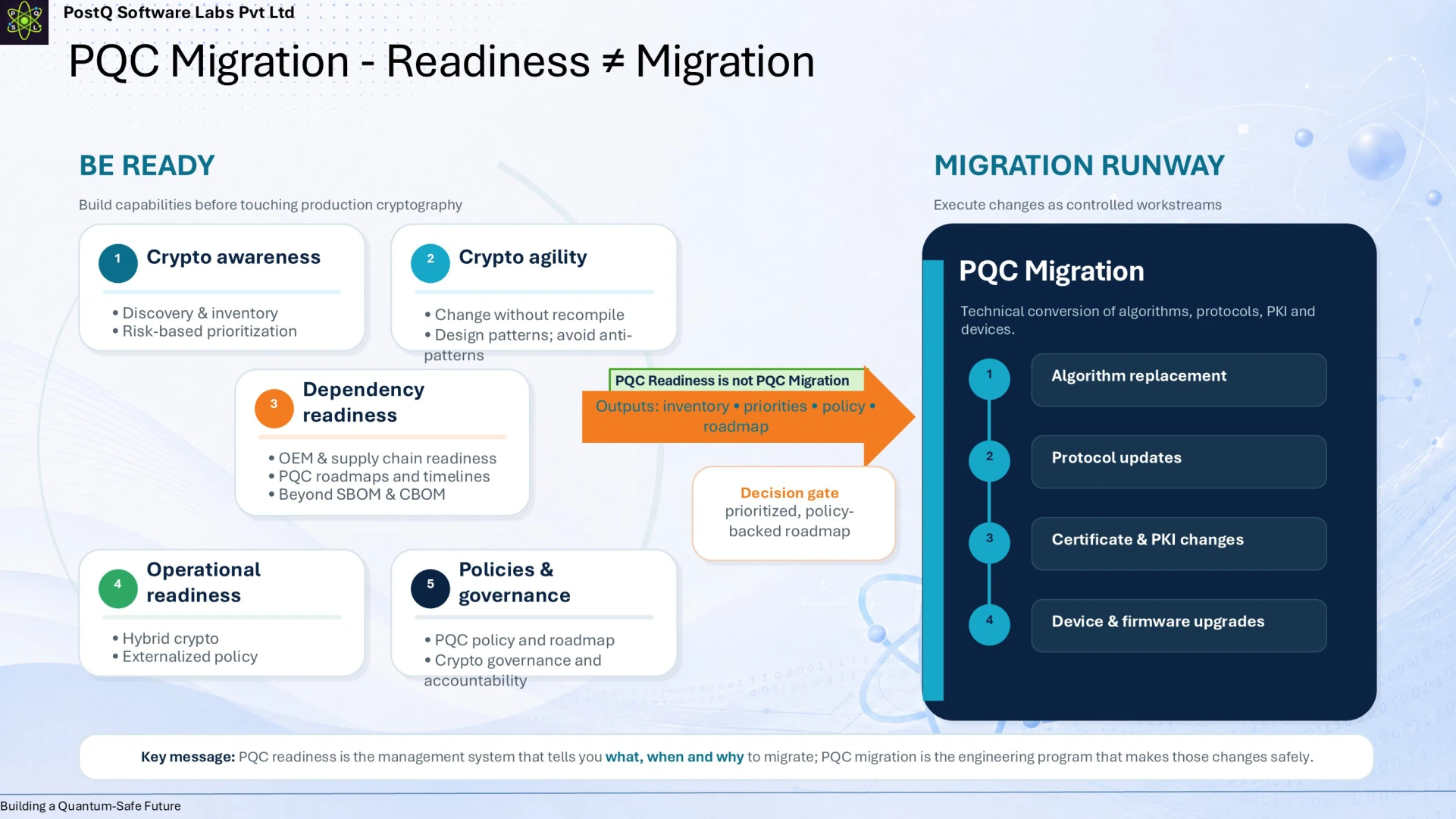
Readiness builds the management capability to decide what to migrate, when, and why. The migration runway is the engineering work itself: changing algorithms, protocols, certificates, devices, and firmware. Treating these as related but distinct work helps teams prepare before they touch production cryptography.
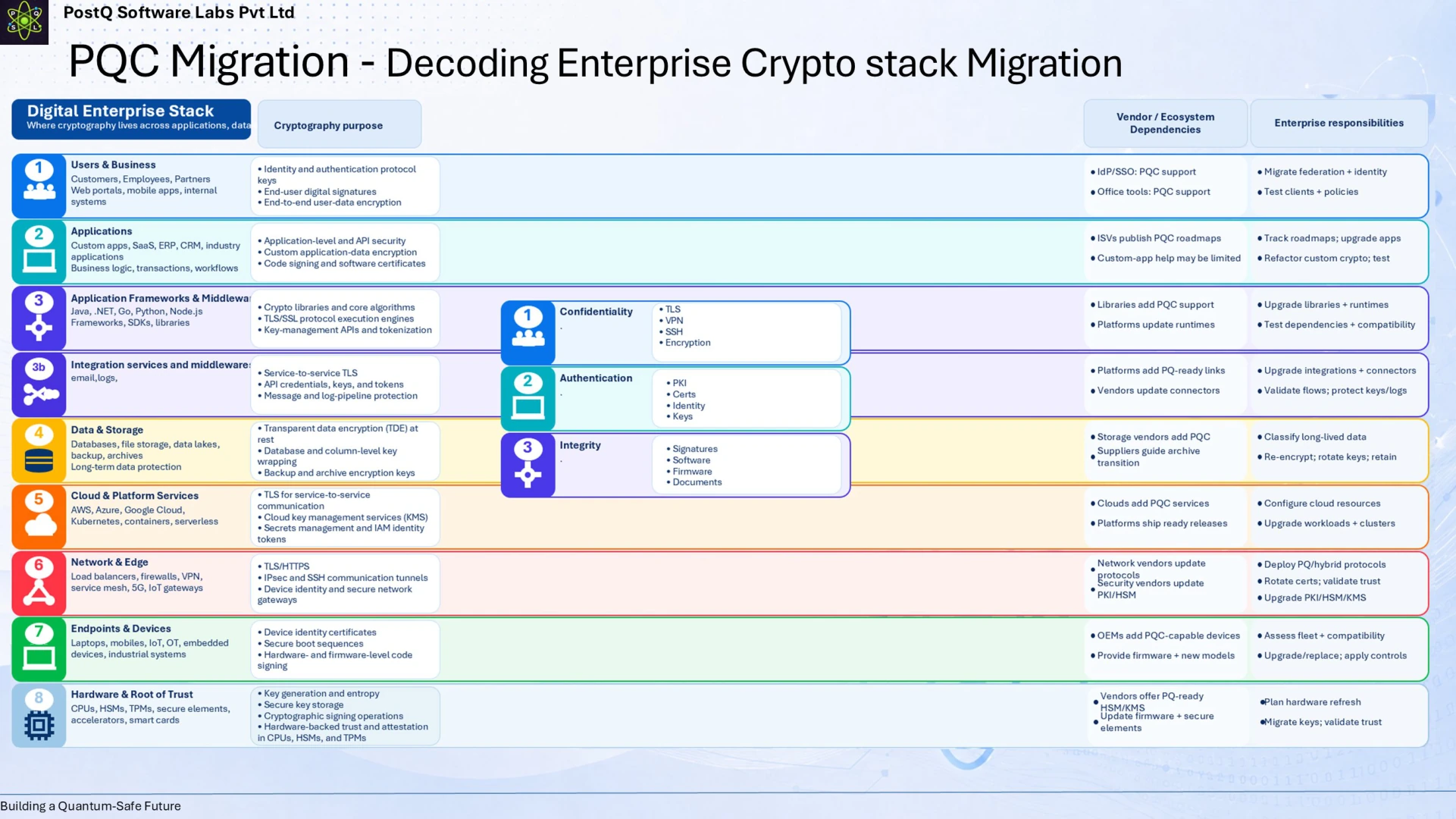
Cryptography appears across users and business services, applications, middleware, data stores, cloud platforms, networks, endpoints, and hardware roots of trust. Each layer brings vendor dependencies and enterprise responsibilities, so a migration plan has to connect technical components with owners and upgrade paths.
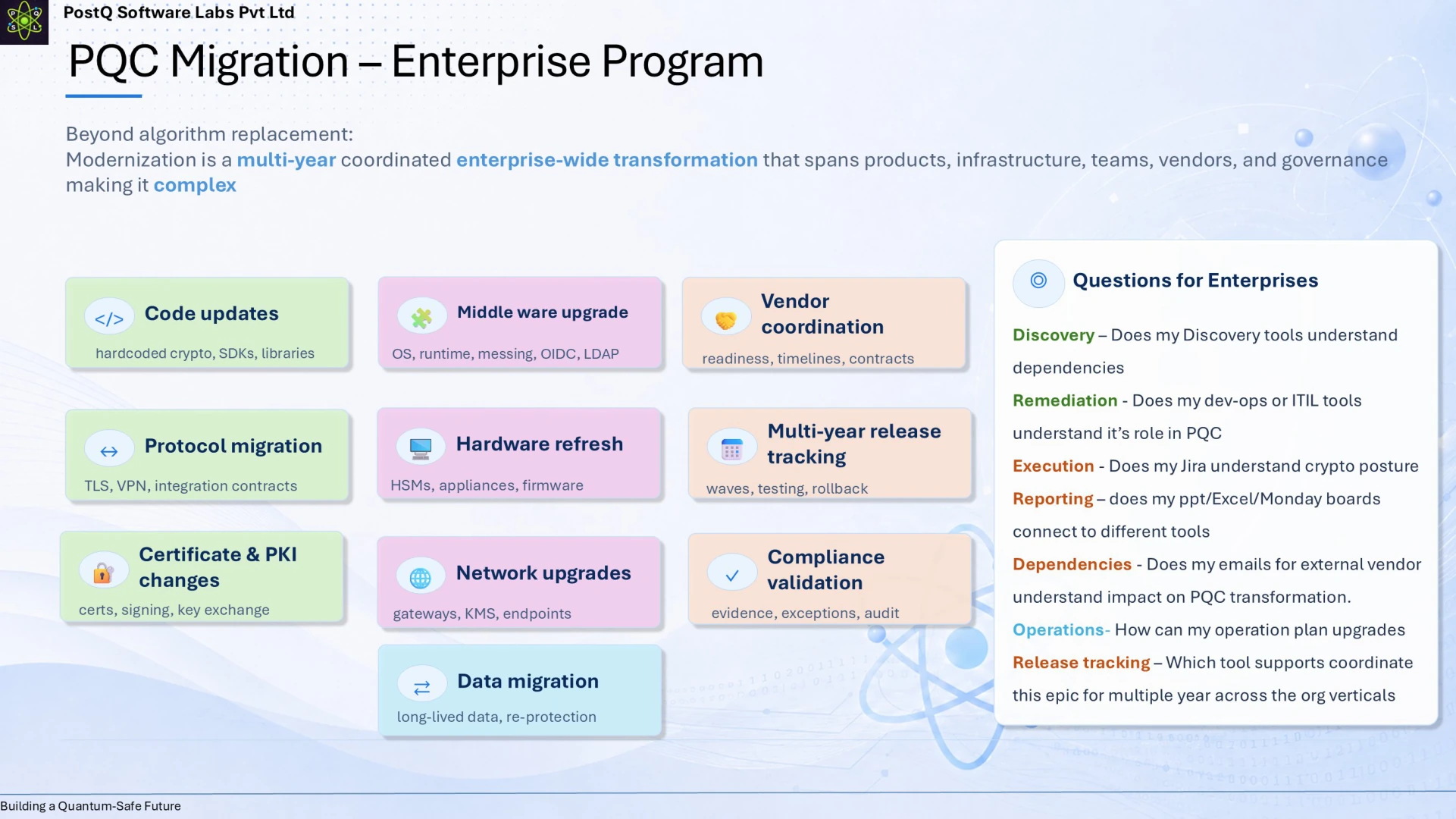
Beyond algorithm replacement, the slide presents PQC as a coordinated, multi-year program. Code changes, protocol work, certificates, hardware, vendors, compliance, data protection, and release tracking have to be planned together, with clear ownership and a way to coordinate progress across teams.
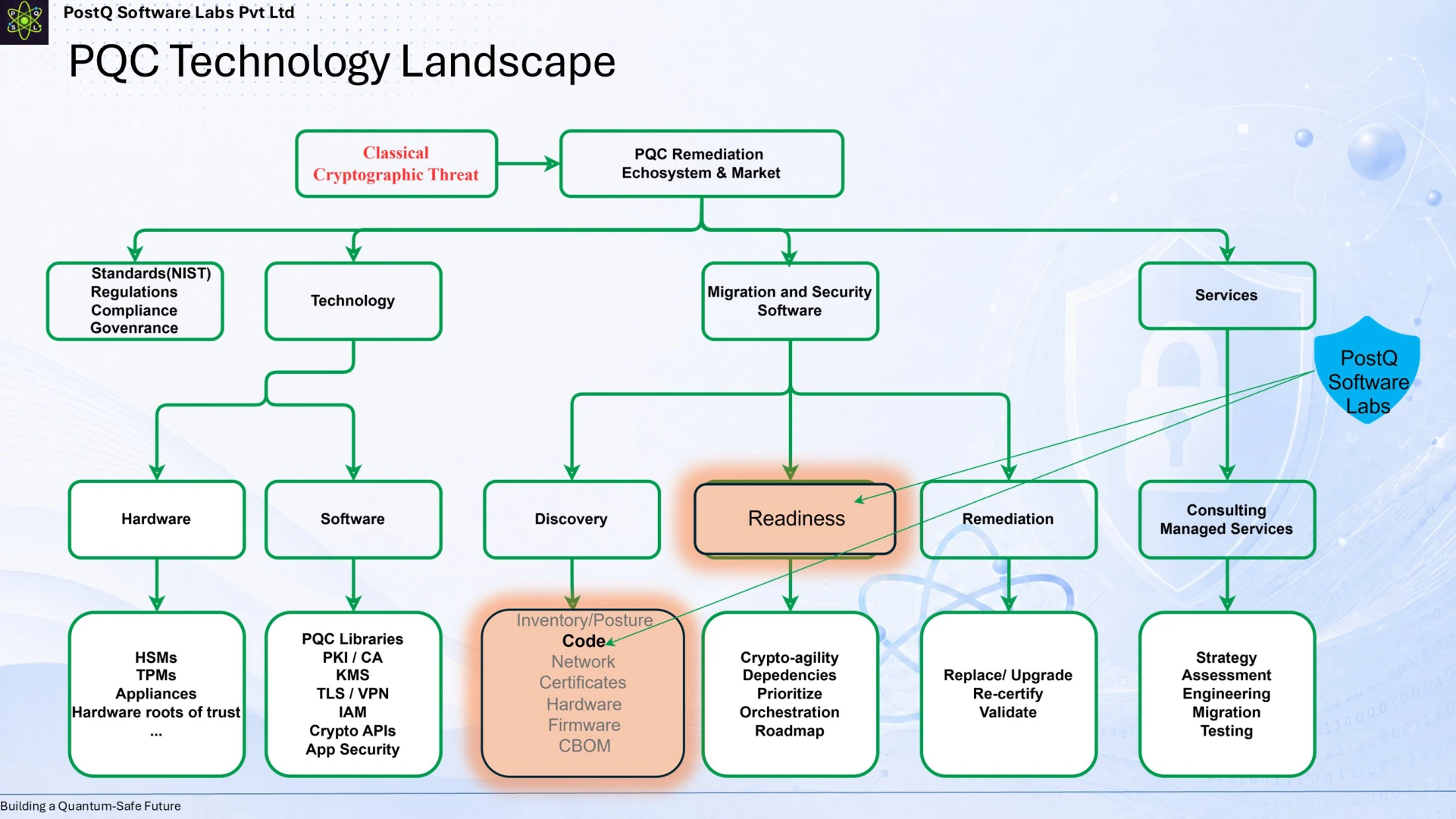
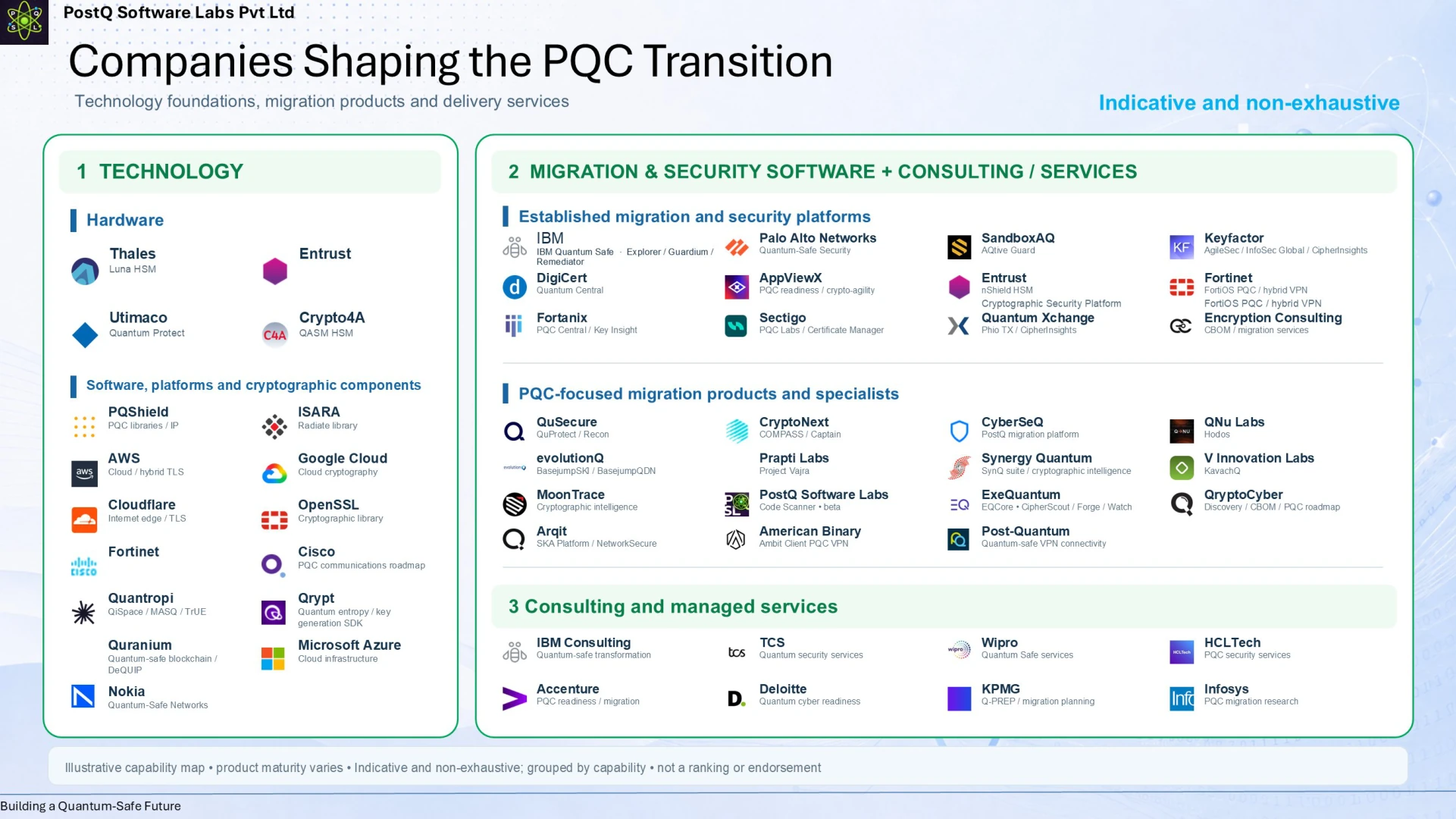
The ecosystem spans standards and governance, enabling technologies, migration and security software, and consulting or managed services. This view helps organizations see the range of capabilities involved when they assess partners and build a migration approach.
The final slide groups examples across technology foundations, migration and security products, and consulting or delivery services. The map is described as indicative and non-exhaustive, and it explicitly says it is not a ranking or endorsement. Product availability and maturity can vary.